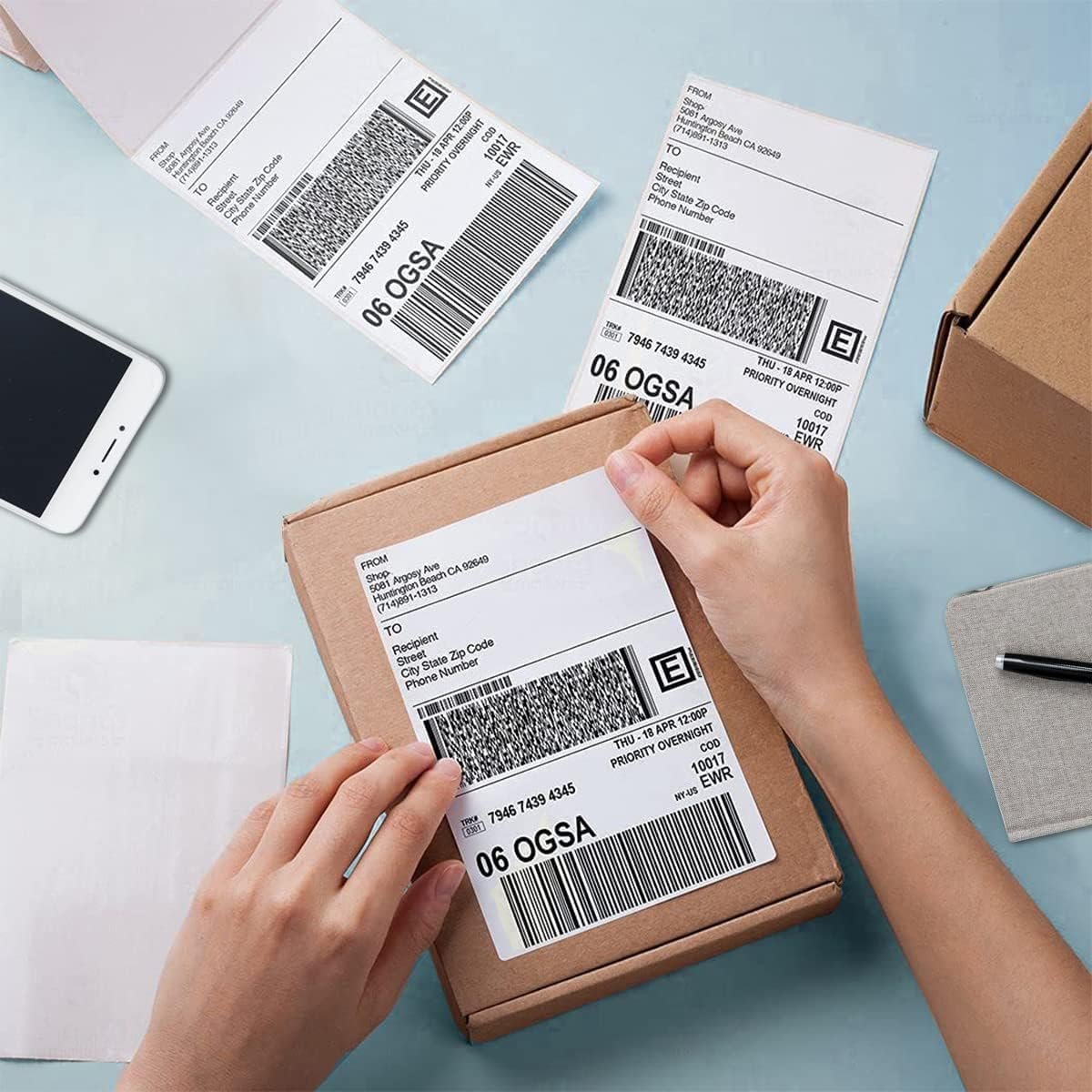
In today’s fast-paced business environment, efficient product tracking, inventory management, and shipping operations are more important than ever. Thermal labels have become an essential solution for businesses that require high-speed, reliable, and cost-effective printing.
From ecommerce warehouses to retail stores and logistics companies, thermal labels are used every day to ensure smooth business operations.
In this guide, we’ll explain what thermal labels are, how they work, their benefits, and how to choose the right thermal label for your business.
What Are Thermal Labels?
Thermal labels are specially coated labels designed for use with thermal printers. Unlike traditional ink-based printing, thermal printing uses heat to create images, text, and barcodes directly onto the label surface.
This eliminates the need for ink cartridges, toner, or ribbons in direct thermal printing applications, making thermal labels a cost-effective and maintenance-friendly solution.
How Do Thermal Labels Work?
Thermal labels work using heat generated by the print head of a thermal printer.
When the print head applies heat to specific areas of the label, the heat-sensitive coating reacts and turns black, creating text, images, and barcodes.
This technology allows businesses to print:
- Shipping labels
- Barcode labels
- Product labels
- Inventory labels
- Courier labels
- Address labels
quickly and efficiently.
Types of Thermal Labels
1. Direct Thermal Labels
Direct thermal labels use heat-sensitive paper that changes color when exposed to heat.
Advantages:
- No ink, toner, or ribbons required
- Lower operating costs
- Faster printing speed
- Easy maintenance
Best For:
- Shipping labels
- Courier labels
- Ecommerce labels
- Warehouse labels
- Temporary product labels
2. Thermal Transfer Labels
Thermal transfer labels use a ribbon to transfer ink onto the label surface.
Advantages:
- More durable prints
- Resistant to moisture and heat
- Long-lasting barcode readability
Best For:
- Asset tracking
- Outdoor labels
- Chemical products
- Long-term inventory storage
Benefits of Using Thermal Labels
Faster Printing
Thermal printers can print labels quickly, helping businesses process orders faster.
Lower Operating Costs
Direct thermal printing eliminates the need for expensive ink cartridges and toners.
High Print Quality
Thermal labels provide sharp text and scannable barcodes for accurate tracking.
Reduced Maintenance
Fewer moving parts and consumables result in lower maintenance requirements.
Improved Efficiency
Faster printing and better barcode readability improve warehouse productivity.
Industries That Use Thermal Labels
Thermal labels are widely used across multiple industries, including:
Ecommerce
Online sellers use thermal labels for shipping and order fulfillment.
Logistics and Courier Services
Courier companies rely on barcode labels for tracking shipments.
Retail Stores
Retail businesses use barcode labels for inventory and pricing.
Warehouses
Warehouses use thermal labels for inventory management and stock tracking.
Healthcare
Hospitals and pharmacies use thermal labels for patient records and medication labeling.
Manufacturing
Manufacturers use barcode labels for production and product identification.
Common Applications of Thermal Labels
Thermal labels are commonly used for:
- Shipping labels
- Barcode labels
- Product identification
- Price labels
- Shelf labels
- Warehouse labels
- Inventory tracking
- Courier labels
- Packaging labels
- Asset management labels
How to Choose the Right Thermal Labels
When selecting thermal labels, consider the following factors:
Label Size
Choose a size that matches your printer and application requirements.
Adhesive Type
Different environments require different adhesive strengths.
Print Durability
Consider whether the label needs to withstand moisture, sunlight, or chemicals.
Printer Compatibility
Ensure the labels are compatible with your thermal printer model.
Usage Duration
Short-term applications may use direct thermal labels, while long-term applications often require thermal transfer labels.
Why Businesses Choose Prime Pack Solution
At Prime Pack Solution, we supply premium-quality thermal labels designed to deliver:
- Sharp and clear barcode printing
- Strong adhesive performance
- Excellent printer compatibility
- Reliable scanning performance
- Consistent quality in bulk orders
- Competitive pricing
Our products are trusted by ecommerce sellers, logistics companies, warehouses, retailers, and manufacturers across India.